A squad operating without defined roles is merely an armed mob, a collection of individuals with overlapping capabilities and critical strategic gaps. True tactical cohesion is born from specialization. Within the fluid structure of the Resistance, three primary Raider Archetypes have emerged as the pillars of a successful fireteam: Assault, Support, and Recon. These are not rigid classes, but doctrinal philosophies that guide a Raider’s choice of gear, tactical positioning, and battlefield responsibilities. Understanding your own role and, just as critically, the roles of your squadmates is the foundational requirement for moving beyond chaotic skirmishes into the realm of coordinated, surgical operations.
This analysis will provide a comprehensive breakdown of each archetype, defining their operational parameters, core competencies, and synergistic interplay within a balanced squad composition.
The Principle of Interdependence
The three archetypes are designed around the principle of Interdependence. No single role is self-sufficient. The Assault archetype has the firepower to breach a position but lacks the sustain to hold it. The Support can provide that sustain but lacks the mobility to initiate a push.
The Recon can provide the intelligence for a safe push but lacks the firepower to execute it alone. Each role is designed to compensate for the inherent weaknesses of the other two. A successful squad is not three Raiders fighting alongside each other, but a single tactical entity composed of three specialized, mutually supporting components. The strength of the squad is not the sum of its parts, but the product of their synergy.
Archetype 1: The Assault
The tip of the spear. The Assault archetype is the primary kinetic force of the squad, responsible for direct engagement, breaching fortified positions, and overwhelming the enemy with aggressive, close-range violence. This is the most straightforward but also the most high-risk role.
- Core Competencies: Close-Quarters Combat (CQC), aggressive repositioning, and high-damage burst output.
- Typical Loadout: High-fire-rate weapons (“Stitcher” SMGs, shotguns), Frag or Incendiary Grenades, and heavy armor for survivability.
- Battlefield Role: The Assault operator is always at the front. They lead the charge into a room, they are the first to push a weakened enemy, and their job is to create chaos and break the enemy’s defensive line, creating openings for the other roles to exploit. Their operational tempo is fast, violent, and decisive.
Archetype 2: The Support
The anchor of the squad. The Support archetype is the force multiplier, responsible for squad sustainment, area denial, and providing the suppressive fire that enables the Assault’s maneuvers. This role is less about personal glory and more about ensuring the squad’s overall combat effectiveness.
- Core Competencies: Resource management, positional defense, and suppressive fire.
- Typical Loadout: LMGs or versatile rifles (“Varmint”), extra medical supplies and ammunition, and utility gadgets like the Shield Wall or trip mines.
- Battlefield Role: The Support dictates the squad’s staying power. They lay down a base of fire that allows the Assault to move safely. They are responsible for carrying the extra supplies, fortifying defensive positions during an extraction, and serving as the stable “pivot point” around which the other two roles can maneuver.
Archetype 3: The Recon
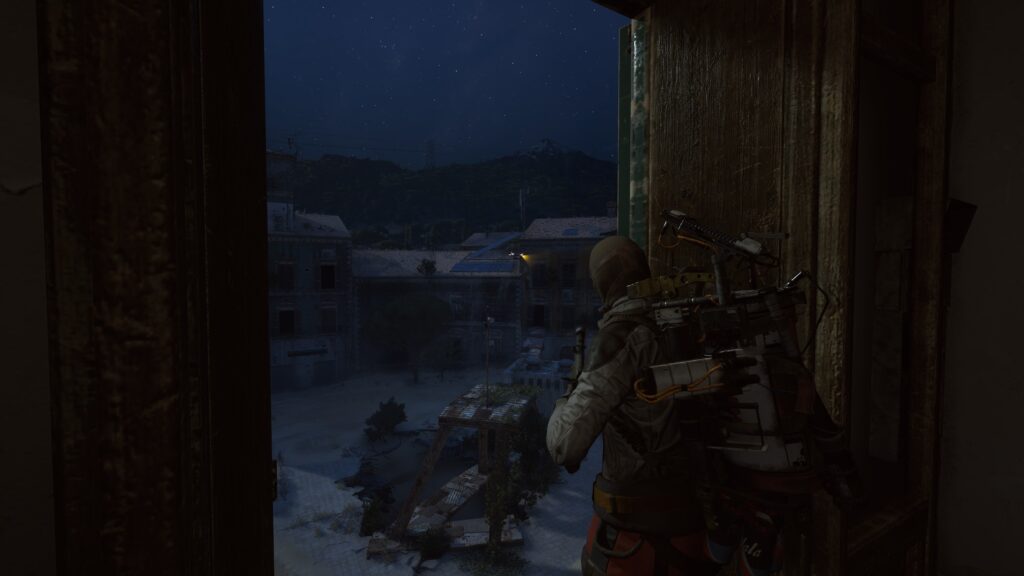
The eyes and ears of the team. The Recon archetype is the intelligence specialist, responsible for scouting ahead, identifying threats, and controlling the flow of information. They operate on the periphery, avoiding direct combat in favor of providing the critical intelligence that prevents the squad from walking into traps.

- Core Competencies: Stealth, long-range observation, and target prioritization.
- Typical Loadout: Suppressed, long-range weapons (“Hammer” rifles), Recon Grenades or drones, and a grappling hook or other mobility tool.
- Battlefield Role: The Recon finds the fight, but does not start it. They identify patrol routes, mark high-value targets for the Assault, find safe flanking paths, and provide overwatch from a concealed, elevated position. Their primary contribution is ensuring that the squad always engages the enemy on its own terms, with the advantage of surprise and superior information.
Squad Synergy and Tactical Application Matrix
The effectiveness of the archetypes is demonstrated in how they combine their skills to solve tactical problems. This matrix shows how the tripod works in concert.
| Tactical Objective | Recon’s Action | Support’s Action | Assault’s Action |
|---|---|---|---|
| Breach a Fortified Room | Uses a Recon Grenade to tag all enemies inside, identifying the primary threat. | Deploys a Shield Wall at the door to provide cover for the breach. | Throws a flashbang and pushes in, focusing fire on the tagged high-value target. |
| Ambush an ARC Patrol | Initiates the ambush by sniping the highest-priority target (e.g., a Knight). | Lays down suppressing fire on the remaining Troopers, pinning them in the kill zone. | Uses the suppression to flank the pinned enemies for clean-up kills. |
| Extraction Zone Defense | Takes an overwatch position to call out heavy unit spawns and directions. | Deploys traps and provides a steady base of fire on the main chokepoint. | Acts as the mobile “flex” player, responding to breaches and high-threat enemies. |
Conclusion: The Cohesive Whole
The Raider archetypes are the foundational grammar of effective squad tactics. A team that embraces this specialization elevates itself from a disorganized gaggle into a cohesive, professional fighting unit.
By ensuring each member understands and masters their role—be it the decisive violence of the Assault, the steady resilience of the Support, or the cunning foresight of the Recon—the squad becomes a versatile and lethal organism. It can adapt to any threat, control any engagement, and achieve a level of operational success that is impossible for the lone wolf to even contemplate.